

A plain buyer's guide for garage and basement shops: what to check before you buy, and what a full system costs.
Last updated
The short answer
Pick dust collection controls that fit the gates, duct, and collector you already own. Check that each gate size is covered, that every tool can trigger it at its real voltage and amperage, and that the collector starts the way it starts today. Then price the whole system, not one gate, and ask what happens when the internet goes down.
Start with the parts list
Price the whole working system: a Hub, one Trigger per tool, one Gate Control per branch, a collector control, and power for the gates. A two-tool example comes to about $1,215 before tax and shipping.
| Part | Qty | Price |
|---|---|---|
| GRIT Hub (GH-HU1001) | 1 | $350 |
| 120V Trigger (GH-TR1001) | 2 | $330 |
| 4 inch Gate Control (GH-GC1040) | 2 | $270 |
| 120V Collector Control (GH-CO1001) | 1 | $165 |
| Power Bank (GH-PB1003) | 1 | $100 |
| Example total | $1,215 |
5 and 6 inch Gate Controls are $235 each, and the iVAC Retrofit Gate Control is $80. Your list depends on your tools, gate sizes, and collector. Build your exact parts list.
Check these before you buy
Ask every seller these ten questions. A good answer names your gate sizes, your tools, and your collector.
Retrofit fit
Ask: Do I keep my metal gates and duct, or buy new gates?
GRIT at Home: Keep them. A Gate Control bolts onto the metal blast gate you already have. GRIT does not sell blast gates.
Gate sizes
Ask: Which diameters are covered?
GRIT at Home: 2.5, 3, 4, 5, and 6 inch Gate Controls, plus an iVAC retrofit.
120V and 220V tools
Ask: Does every tool trigger it at its plug and amperage?
GRIT at Home: 120V and 220V Triggers up to 15 A, and Heavy Duty Triggers up to 35 A.
Auto-start
Ask: How does the collector start: outlet, magnetic starter, or remote?
GRIT at Home: Collector Controls for 120V and 220V outlets up to 15 A, magnetic starters, and IR or RF remotes.
Manual run
Ask: Can I run the collector for a tool with no plug, like a lathe or floor sweep?
GRIT at Home: The Switch Trigger gives you a remote-style switch for a lathe or floor sweep.
Full-system cost
Ask: What does a working system cost, not just one gate?
GRIT at Home: The example two-tool parts list is about $1,215. See the parts list above.
App
Ask: How do I see and change settings?
GRIT at Home: The GRIT App opens on your phone or tablet. The Hub connects to your shop network by Wi-Fi or Ethernet.
Internet and subscription
Ask: Does it stop working without internet or a plan?
GRIT at Home: No. The Hub runs the sequence in your shop and works local-only. Connecting it to the cloud adds features, and optional GRIT Tunnel adds remote access from anywhere for $5 a month.
GRIT Lock
Ask: Can it keep tools off when kids or grandkids are around?
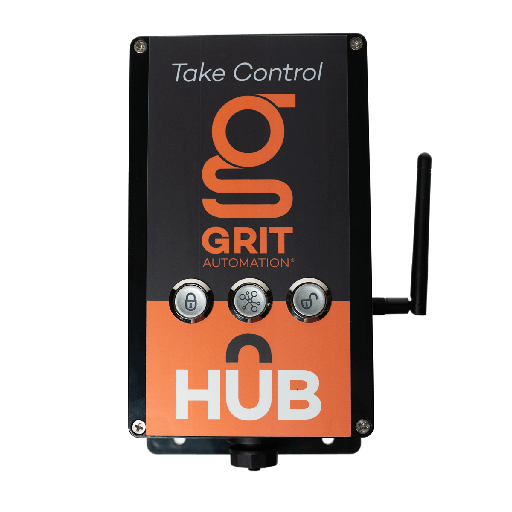
GRIT at Home: Yes. The standard GRIT Hub includes GRIT Lock, which locks or unlocks the whole shop so kids or grandkids can't start dangerous tools.
Support
Ask: Who helps if something does not work?
GRIT at Home: A person answers at support@gritathome.com. Hardware has a 12-month limited warranty.
Keep the gates you already have
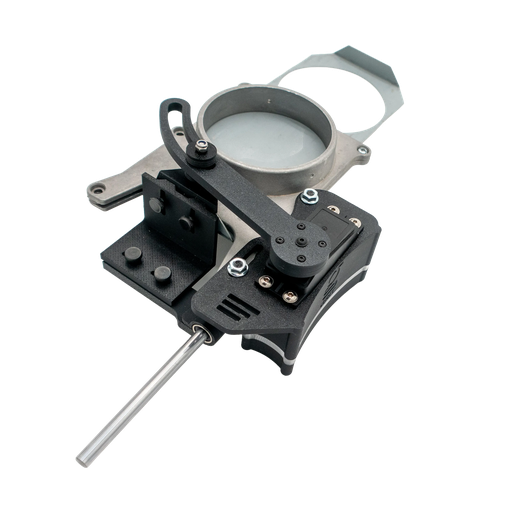
Most home shops already have free-sliding metal blast gates on fixed duct. Controls that bolt onto those gates save you from cutting duct and buying new gates.
Some automated gate systems sell the gate and the motor as one unit, so you replace each gate. GRIT Gate Controls bolt onto your metal gates in 2.5 to 6 inch sizes. If you already run iVAC gates, the iVAC Retrofit Gate Control lets GRIT run them.
Not sure your gates will work? Watch which blast gates are compatible.
Match every tool and the collector
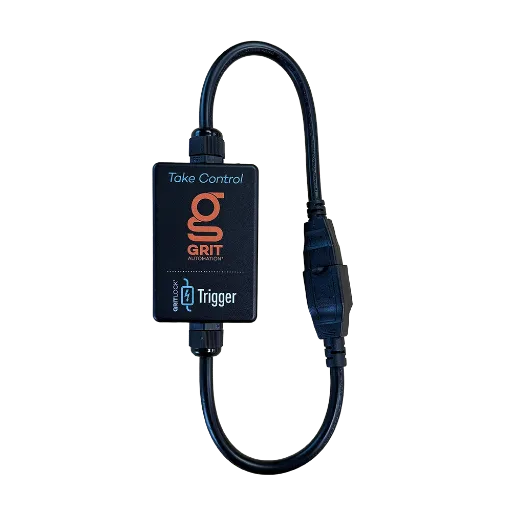
Each tool needs a Trigger that matches its plug, voltage, and amperage. The collector needs a control that matches how it starts today.
- A 120V Trigger handles shop tools up to 15 A. 220V and 35 A Heavy Duty Triggers cover bigger saws and planers.
- A plug-in collector up to 15 A uses a 120V or 220V Collector Control.
- A collector with a magnetic starter uses the MagSwitch Collector.
- A collector with an IR or RF remote uses the IR/RF Collector. It is a good fit for Oneida collectors.
Read your collector's plate and check how it turns on before you order. Have a magnetic starter? Start here.
Run the collector only while a tool runs
Automation runs the collector while a tool runs, then shuts it off after a short delay that clears the line. You stop leaving the collector on between cuts. If you are still deciding whether your shop needs this yet, read the signs it is time to automate your dust collector.
Each open gate pulls air the collector needs elsewhere. Opening only the branch in use keeps suction at the tool. If suction still feels weak, use the lost suction checklist.
Pick the setup that fits your shop
Two or three tools on duct
Start with the two tools you use most. That is the starter system. Add Triggers and Gate Controls later on the same Hub.
Already running iVAC gates
Keep them. Use the iVAC Retrofit Gate Control on each one. Watch the iVAC setup.
Still on flex hose or a shop vac
Sort out duct and gates first. Read flex hose vs hard duct and shop vac vs ducted dust collection.
Kids or visitors in the shop
Use GRIT Lock, included with the standard Hub, to lock or unlock the whole shop. See how GRIT Lock keeps a home shop safer.
Other systems home shops compare
iVAC is a common choice for home shops. As of October 21, 2026, iVAC lists Pro blast gates in 4 inch and 6 inch sizes, with adapters for 5 inch and 2.5 inch, and each gate uses its own 115V AC adapter (iVAC Pro blast gates).
Compare any system on the same checklist: what you keep, which gate sizes are covered, how the collector starts, how the gates get power, and the price of the whole working system.
Questions home shops ask
What are dust collection controls?
They start the dust collector and open the right blast gate when a tool turns on, then shut down after the tool stops.
Do I need new blast gates?
Not with GRIT. Gate Controls bolt onto free-sliding metal blast gates from 2.5 to 6 inches. iVAC gates use the iVAC retrofit.
How much does a complete home system cost?
The example two-tool GRIT system is about $1,215 before tax and shipping. Your price depends on your tools, gate sizes, and collector.
Does it need Wi-Fi or a subscription?
No. The Hub runs the sequence in your shop and works local-only. It connects by Wi-Fi or Ethernet when you want the app or cloud features, and GRIT Tunnel adds remote access from anywhere for $5 a month.
Will it work with my 220V tools?
Yes. 220V Triggers cover tools up to 15 A, and Heavy Duty Triggers cover tools up to 35 A.
Is this a safety system?
No. Dust automation handles gates and collector start. GRIT Lock helps keep tools off, but neither replaces machine guarding.
Build your starter system
Enter your two most-used tools, their gate sizes, and how your collector starts. You get a parts list you can order.

How to choose dust collection controls for a home shop
A plain buyer's guide for garage and basement shops: what to check before you buy, and what a full system costs.
Last updated
The short answer
Pick dust collection controls that fit the gates, duct, and collector you already own. Check that each gate size is covered, that every tool can trigger it at its real voltage and amperage, and that the collector starts the way it starts today. Then price the whole system, not one gate, and ask what happens when the internet goes down.
Start with the parts list
Price the whole working system: a Hub, one Trigger per tool, one Gate Control per branch, a collector control, and power for the gates. A two-tool example comes to about $1,215 before tax and shipping.
| Part | Qty | Price |
|---|---|---|
| GRIT Hub (GH-HU1001) | 1 | $350 |
| 120V Trigger (GH-TR1001) | 2 | $330 |
| 4 inch Gate Control (GH-GC1040) | 2 | $270 |
| 120V Collector Control (GH-CO1001) | 1 | $165 |
| Power Bank (GH-PB1003) | 1 | $100 |
| Example total | $1,215 |
5 and 6 inch Gate Controls are $235 each, and the iVAC Retrofit Gate Control is $80. Your list depends on your tools, gate sizes, and collector. Build your exact parts list.
Check these before you buy
Ask every seller these ten questions. A good answer names your gate sizes, your tools, and your collector.
Retrofit fit
Ask: Do I keep my metal gates and duct, or buy new gates?
GRIT at Home: Keep them. A Gate Control bolts onto the metal blast gate you already have. GRIT does not sell blast gates.
Gate sizes
Ask: Which diameters are covered?
GRIT at Home: 2.5, 3, 4, 5, and 6 inch Gate Controls, plus an iVAC retrofit.
120V and 220V tools
Ask: Does every tool trigger it at its plug and amperage?
GRIT at Home: 120V and 220V Triggers up to 15 A, and Heavy Duty Triggers up to 35 A.
Auto-start
Ask: How does the collector start: outlet, magnetic starter, or remote?
GRIT at Home: Collector Controls for 120V and 220V outlets up to 15 A, magnetic starters, and IR or RF remotes.
Manual run
Ask: Can I run the collector for a tool with no plug, like a lathe or floor sweep?
GRIT at Home: The Switch Trigger gives you a remote-style switch for a lathe or floor sweep.
Full-system cost
Ask: What does a working system cost, not just one gate?
GRIT at Home: The example two-tool parts list is about $1,215. See the parts list above.
App
Ask: How do I see and change settings?
GRIT at Home: The GRIT App opens on your phone or tablet. The Hub connects to your shop network by Wi-Fi or Ethernet.
Internet and subscription
Ask: Does it stop working without internet or a plan?
GRIT at Home: No. The Hub runs the sequence in your shop and works local-only. Connecting it to the cloud adds features, and optional GRIT Tunnel adds remote access from anywhere for $5 a month.
GRIT Lock
Ask: Can it keep tools off when kids or grandkids are around?
GRIT at Home: Yes. The standard GRIT Hub includes GRIT Lock, which locks or unlocks the whole shop so kids or grandkids can't start dangerous tools.
Support
Ask: Who helps if something does not work?
GRIT at Home: A person answers at support@gritathome.com. Hardware has a 12-month limited warranty.
Keep the gates you already have
Most home shops already have free-sliding metal blast gates on fixed duct. Controls that bolt onto those gates save you from cutting duct and buying new gates.
Some automated gate systems sell the gate and the motor as one unit, so you replace each gate. GRIT Gate Controls bolt onto your metal gates in 2.5 to 6 inch sizes. If you already run iVAC gates, the iVAC Retrofit Gate Control lets GRIT run them.
Not sure your gates will work? Watch which blast gates are compatible.
Match every tool and the collector
Each tool needs a Trigger that matches its plug, voltage, and amperage. The collector needs a control that matches how it starts today.
- A 120V Trigger handles shop tools up to 15 A. 220V and 35 A Heavy Duty Triggers cover bigger saws and planers.
- A plug-in collector up to 15 A uses a 120V or 220V Collector Control.
- A collector with a magnetic starter uses the MagSwitch Collector.
- A collector with an IR or RF remote uses the IR/RF Collector. It is a good fit for Oneida collectors.
Read your collector's plate and check how it turns on before you order. Have a magnetic starter? Start here.
Run the collector only while a tool runs
Automation runs the collector while a tool runs, then shuts it off after a short delay that clears the line. You stop leaving the collector on between cuts. If you are still deciding whether your shop needs this yet, read the signs it is time to automate your dust collector.
Each open gate pulls air the collector needs elsewhere. Opening only the branch in use keeps suction at the tool. If suction still feels weak, use the lost suction checklist.
Pick the setup that fits your shop
Two or three tools on duct
Start with the two tools you use most. That is the starter system. Add Triggers and Gate Controls later on the same Hub.
Already running iVAC gates
Keep them. Use the iVAC Retrofit Gate Control on each one. Watch the iVAC setup.
Still on flex hose or a shop vac
Sort out duct and gates first. Read flex hose vs hard duct and shop vac vs ducted dust collection.
Kids or visitors in the shop
Use GRIT Lock, included with the standard Hub, to lock or unlock the whole shop. See how GRIT Lock keeps a home shop safer.
Other systems home shops compare
iVAC is a common choice for home shops. As of October 21, 2026, iVAC lists Pro blast gates in 4 inch and 6 inch sizes, with adapters for 5 inch and 2.5 inch, and each gate uses its own 115V AC adapter (iVAC Pro blast gates).
Compare any system on the same checklist: what you keep, which gate sizes are covered, how the collector starts, how the gates get power, and the price of the whole working system.
Questions home shops ask
What are dust collection controls?
They start the dust collector and open the right blast gate when a tool turns on, then shut down after the tool stops.
Do I need new blast gates?
Not with GRIT. Gate Controls bolt onto free-sliding metal blast gates from 2.5 to 6 inches. iVAC gates use the iVAC retrofit.
How much does a complete home system cost?
The example two-tool GRIT system is about $1,215 before tax and shipping. Your price depends on your tools, gate sizes, and collector.
Does it need Wi-Fi or a subscription?
No. The Hub runs the sequence in your shop and works local-only. It connects by Wi-Fi or Ethernet when you want the app or cloud features, and GRIT Tunnel adds remote access from anywhere for $5 a month.
Will it work with my 220V tools?
Yes. 220V Triggers cover tools up to 15 A, and Heavy Duty Triggers cover tools up to 35 A.
Is this a safety system?
No. Dust automation handles gates and collector start. GRIT Lock helps keep tools off, but neither replaces machine guarding.
Build your starter system
Enter your two most-used tools, their gate sizes, and how your collector starts. You get a parts list you can order.